

PCOS Treatment Gwalior
PCOS Treatment in Gwalior
PCOS, or Polycystic Ovary Syndrome, is a hormonal condition that affects how a woman’s ovaries work, often causing irregular periods, weight gain, acne, and difficulty conceiving. It’s one of the most common hormonal disorders among women of reproductive age, and it’s also one of the most under-diagnosed, since symptoms often get dismissed as “normal” period problems for years before a proper diagnosis happens. Getting PCOS treatment in Gwalior early matters because untreated PCOS doesn’t just affect fertility, it raises long-term risk for diabetes, heart disease, and fatty liver.
A study by the Department of Endocrinology and Metabolism at AIIMS found that 20 to 25 percent of Indian women of childbearing age show signs of PCOS, though prevalence studies across the country range anywhere from under 4 percent to over 22 percent depending on the region and diagnostic criteria used. Whatever the exact number, PCOS is common enough that most women either have it or know someone close to them who does.
Symptoms of PCOS
PCOS doesn’t look the same in every woman, which is part of why it gets missed for so long. Common symptoms include:

Irregular or missed periods
Cycles longer than 35 days, or fewer than 8 periods a year

Weight gain
Especially around the abdomen, often resistant to typical diet and exercise

Acne and oily skin
Linked to higher androgen (male hormone) levels

Excess hair growth
On the face, chest, or back (a condition called hirsutism)

Hair thinning
On the scalp, following a male-pattern pattern

Fertility issues
Difficulty conceiving due to irregular or absent ovulation

Skin darkening
Patches of darker skin, often at the neck or underarms, linked to insulin resistance

Fatigue and mood changes
Often connected to hormonal fluctuation and disrupted sleep
Not every woman with PCOS has all these symptoms. Some women have very mild signs, while others experience several symptoms strongly enough to affect daily life. If two or more of these show up consistently, it’s worth getting evaluated rather than waiting for things to resolve on their own.
Diagnosis Process for PCOS Treatment in Gwalior
There’s no single test that confirms PCOS on its own. Diagnosis is based on a combination of symptoms, blood tests, and imaging, typically following what’s known as the Rotterdam criteria, where a diagnosis is made when at least two of the following three are present:
| Criteria | What It Checks |
|---|---|
| Irregular or absent ovulation | Based on menstrual cycle history and hormone timing |
| Signs of high androgen levels | Either through blood tests or visible symptoms like acne and excess hair growth |
| Polycystic ovaries on ultrasound | Multiple small follicles visible on an ultrasound scan of the ovaries |
At Shashwat Hospital, a PCOS evaluation typically includes:
Detailed history
Menstrual pattern, weight changes, family history of PCOS or diabetes
Blood tests
Hormone panel including testosterone, LH, FSH, and thyroid function, along with fasting blood sugar and insulin levels
Pelvic ultrasound
To check for the follicle pattern associated with PCOS
Ruling out other conditions
Thyroid disorders and other hormonal issues can mimic PCOS symptoms, so these are checked before finalizing a diagnosis
This process usually takes more than one visit, since some tests are timed to specific days of the menstrual cycle for accurate results.
Treatment Options Available for PCOS
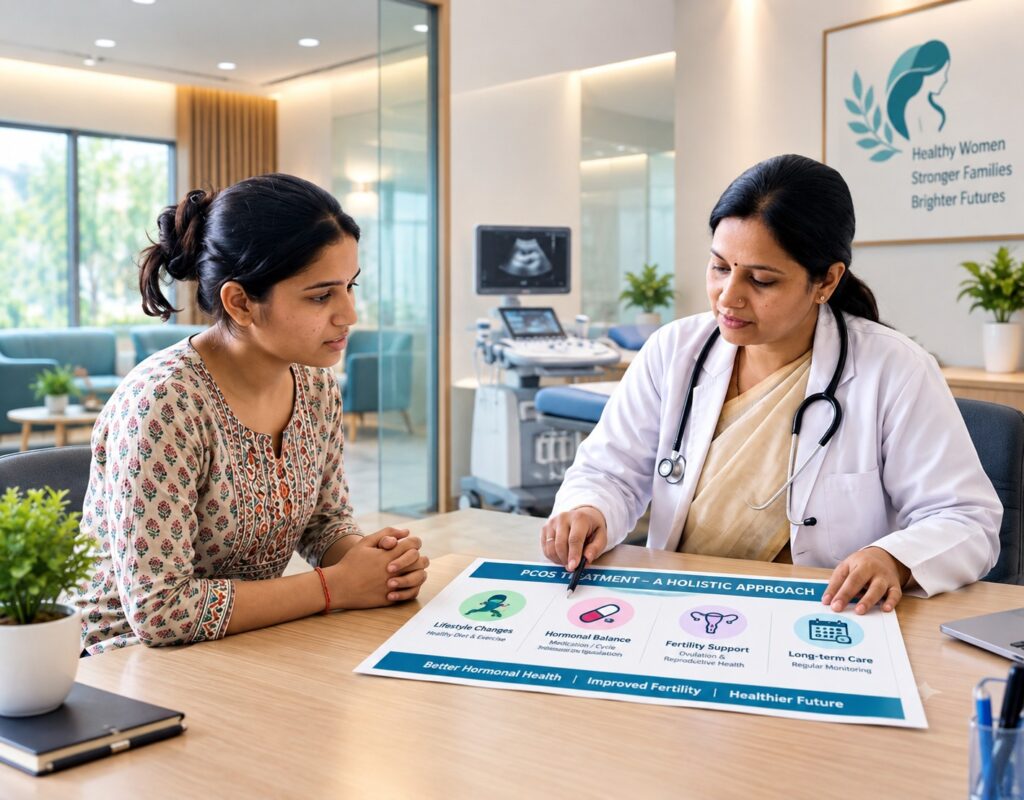
There’s no single cure for PCOS, but it can be managed effectively with the right combination of lifestyle changes, medication, and regular monitoring.
Lifestyle changes. For many women, this is the foundation of PCOS management, not an afterthought. Even a 5 to 10 percent reduction in body weight has been shown to improve ovulation and hormone balance in women with PCOS. This includes:
- Regular physical activity, at least 30 minutes most days
- A diet with steady blood sugar impact rather than frequent sugar spikes
- Adequate sleep, since poor sleep worsens insulin resistance
- Stress management, as chronically high stress hormones interfere with reproductive hormones too
Medication
Depending on symptoms and whether pregnancy is a current goal, treatment may include:
- Hormonal birth control to regulate periods and reduce acne or excess hair growth
- Metformin, commonly used to improve insulin sensitivity
- Ovulation-inducing medication for women trying to conceive
- Anti-androgen medication for severe acne or hair growth concerns
Ongoing management
PCOS is a long-term condition, so treatment isn't a one-time fix. Regular follow-up, usually every 3 to 6 months initially, helps track how well the current approach is working and adjust it as needed. Annual screening for diabetes and cholesterol is also recommended for women with PCOS, since the condition raises long-term metabolic risk.
PCOS and Fertility
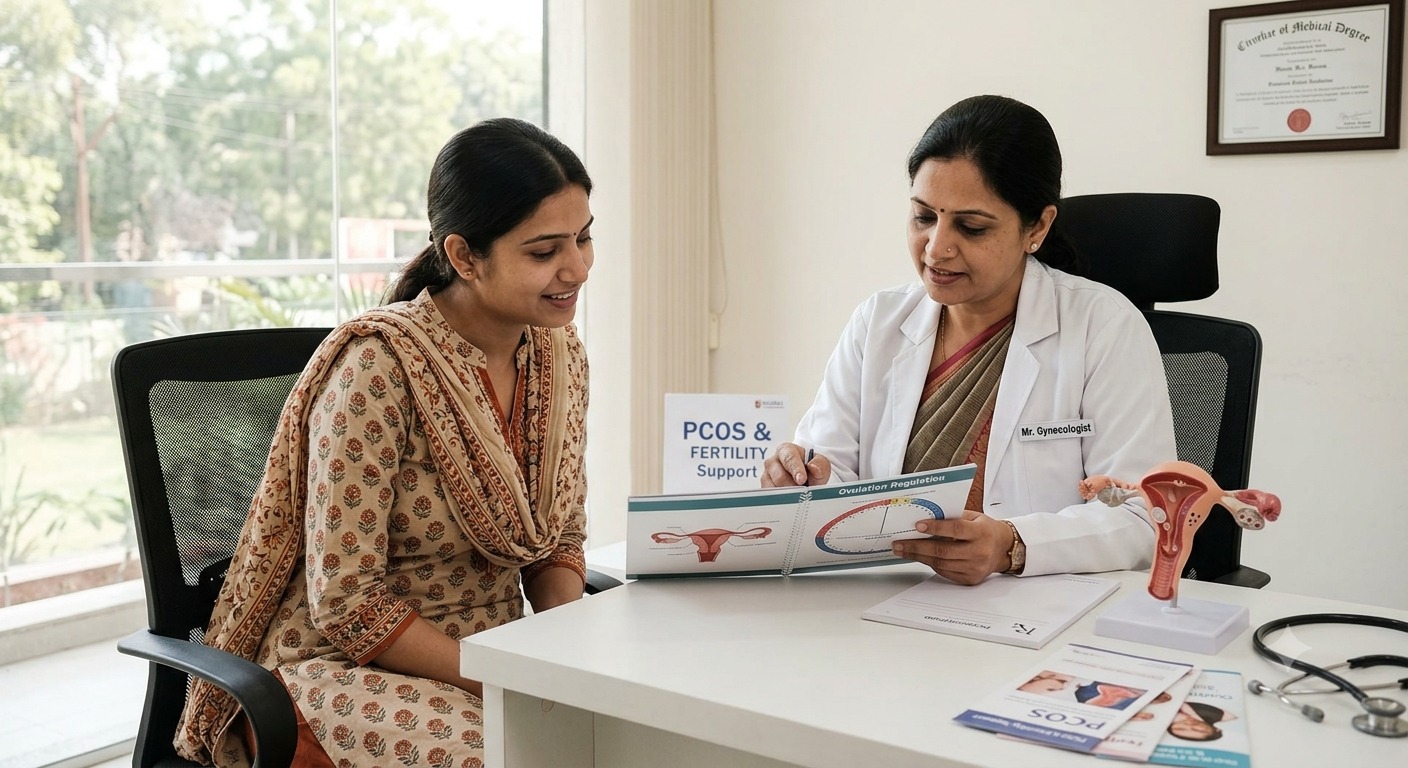
One of the most common reasons women seek PCOS treatment in Gwalior is difficulty conceiving. PCOS is one of the leading causes of ovulation-related infertility, but it’s important to understand that PCOS does not mean infertility. Many women with PCOS conceive naturally once ovulation is regulated through weight management, medication, or both.
For women actively trying to conceive, treatment often starts with the least invasive option first: lifestyle changes to support regular ovulation, followed by ovulation-inducing medication if needed. If these steps don’t lead to pregnancy within a reasonable timeframe, further fertility evaluation and treatment are the next step, and this is where PCOS care connects directly with broader gynecological care. A gynecologist managing PCOS can guide this transition smoothly rather than starting the process over with a new doctor.
Frequently Asked Questions
Is PCOS curable?
PCOS is not curable, but it is very manageable. With the right combination of lifestyle changes, medication, and regular monitoring, most women with PCOS see significant improvement in symptoms and reduce their long-term health risks.
What diet is best for PCOS?
There’s no single “PCOS diet,” but general guidance includes reducing refined sugar and processed carbohydrates, prioritizing fiber and protein, and eating at regular intervals to keep blood sugar stable. A gynecologist or dietitian can build a more specific plan based on your test results.
When should I see a doctor for PCOS symptoms?
If you notice irregular periods, unexplained weight gain, persistent acne, or excess hair growth lasting more than a few months, it’s worth getting evaluated rather than waiting. Earlier diagnosis generally means easier management.
Can PCOS go away on its own?
PCOS is a chronic hormonal condition, so it typically doesn’t resolve without treatment. However, symptoms can improve substantially, and in some cases become minimal, with consistent lifestyle and medical management.
Does PCOS always cause infertility?
No. PCOS can make ovulation irregular, which can make conceiving harder, but many women with PCOS do get pregnant naturally or with basic fertility support like ovulation-inducing medication.
Is weight gain always a symptom of PCOS?
Not always. While weight gain, particularly around the abdomen, is common in PCOS, some women with PCOS maintain a typical weight and still experience other symptoms like irregular periods or acne.
How long does PCOS treatment take to show results?
This varies by individual and treatment type. Menstrual regularity from hormonal treatment can be seen within a few months, while lifestyle-based improvements in symptoms like acne or weight often take 3 to 6 months of consistent effort.