Maternity Delivery (Normal & C-Section)
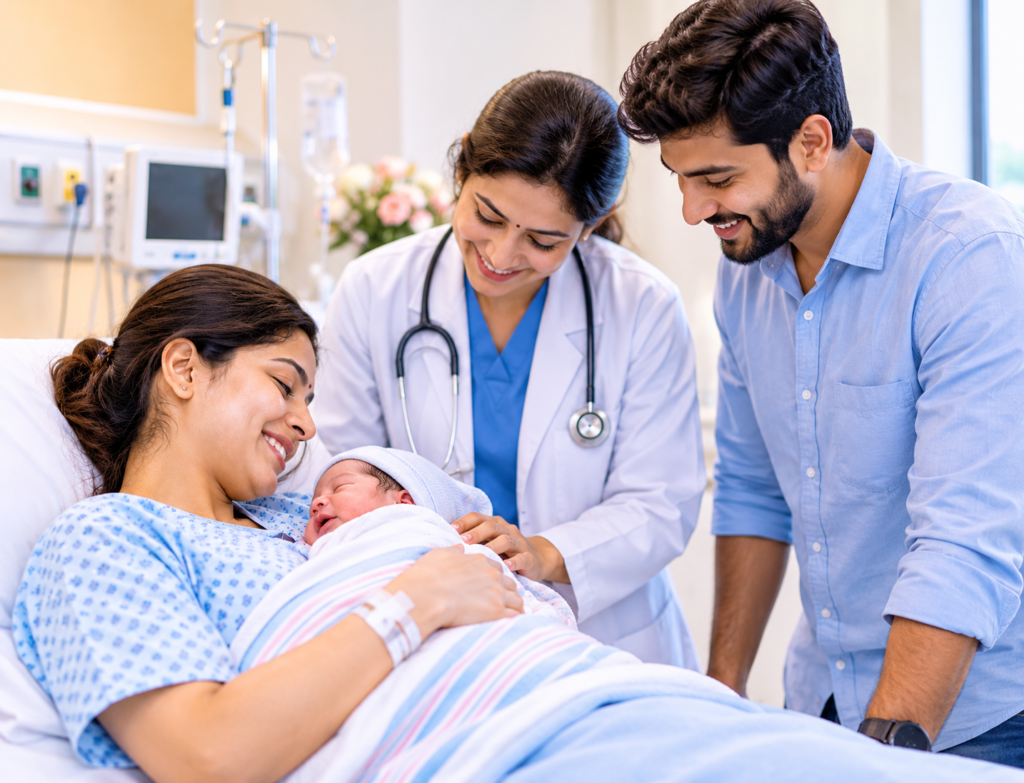
Maternity Hospital in Gwalior: Normal Delivery & C-Section
Choosing a maternity hospital in Gwalior means choosing who will be with you during one of the most important moments of your life, and what options you’ll have when it matters most. At Shashwat Hospital, our maternity care covers both normal delivery and C-section, with the delivery approach decided based on your health, your baby’s position and condition, and safety, not convenience.
This decision carries more weight nationally than many expecting parents realize. NFHS-5 data shows India’s C-section rate rose to 21.5 percent of deliveries, up from 17.2 percent in the previous survey round, while the World Health Organization notes that population-level C-section rates above 10 to 15 percent aren’t associated with better outcomes for mothers or babies. Madhya Pradesh’s own state-wide rate, at around 12.1 percent per NFHS-5, sits within that recommended range, which is a good sign, but it also means the decision between normal delivery and C-section should always be based on medical need, not routine.
Normal Delivery in Gwalior
Normal (vaginal) delivery is the natural birth process, and for most low-risk pregnancies, it’s the safer and faster-recovering option.
The process
Labor typically moves through three stages: early labor with mild, spaced-out contractions, active labor as contractions intensify and the cervix dilates fully, and delivery itself, followed by delivery of the placenta. This process can take anywhere from a few hours to over a day, particularly for a first pregnancy.
Preparation
A few things help normal delivery go smoothly:
- Attending regular prenatal checkups so the care team knows your pregnancy history well before labor starts
- Discussing your birth plan and pain management preferences in advance, not during labor
- Staying physically active during pregnancy, as advised by your doctor, since this often supports an easier labor
- Packing a hospital bag by the third trimester so there's no last-minute scramble
- Knowing the early signs of labor, so you arrive at the right time, not too early or too late
Pain management options
Pain relief during normal delivery isn't one-size-fits-all. Options typically include breathing and relaxation techniques, position changes during labor, and medical pain relief such as epidural anesthesia where available and appropriate. Your care team should walk you through these choices well before delivery day, not present them as a rushed decision mid-labor.
C-Section Delivery in Gwalior
A Cesarean section (C-section) is a surgical delivery, performed when a vaginal delivery isn’t safe for the mother, the baby, or both.
Planned C-section
This is scheduled in advance, usually because of a known factor such as:
- The baby is in a breech (feet-first) or transverse position close to delivery
- Placenta previa, where the placenta covers the cervix
- A prior C-section combined with factors that make vaginal delivery after C-section riskier
- Multiple pregnancy (twins or more) in certain positions
- A maternal health condition that makes labor risky
Emergency C-section
This happens when labor is already underway but a complication develops that makes continuing vaginal delivery unsafe, such as fetal distress, labor that stops progressing despite active effort, or sudden bleeding. Emergency C-sections are performed quickly once the decision is made, which is why having a hospital with immediate surgical readiness matters, not just a maternity ward.
Comparing Normal Delivery & C-Section
| Factor | Normal Delivery | C-Section |
|---|---|---|
| Recovery time | Typically 3 to 5 days for basic recovery | Typically 1 to 2 weeks, since it’s major surgery |
| Hospital stay | Usually 1 to 2 days | Usually 3 to 4 days |
| Pain after delivery | Localized, generally manageable | Surgical site pain, needs more active management |
| Future pregnancies | Generally no restriction | May affect delivery options in future pregnancies |
| When it’s chosen | Preferred when no medical complication requires surgery | Used for a medical reason, planned or emergency |
Post-Delivery Care for Mother and Newborn
Delivery is the beginning of recovery, not the end of care. Our post-delivery program at Shashwat Hospital covers both mother and baby.

For the mother
- Monitoring for bleeding, infection signs, and blood pressure in the hours after delivery
- Pain management appropriate to the type of delivery
- Guidance on breastfeeding positioning and latch before discharge
- Emotional check-ins, since mood changes after delivery are common and shouldn't be dismissed
- Clear discharge instructions on activity limits, wound care for C-section patients, and when to schedule a follow-up visit

For the newborn
- Initial examination immediately after birth, checking breathing, reflexes, and overall condition
- Birth vaccinations, including BCG, Hepatitis B, and OPV, before discharge
- Jaundice monitoring in the days following birth
- Feeding support for the mother in the first days, when latch difficulties are most common
- Weight and general health checks before the baby leaves the hospital
Frequently Asked Questions
Can I choose whether to have a normal delivery or C-section?
Preferences are heard and discussed, but the final decision is based on medical safety for you and your baby. If there’s no medical reason requiring a C-section, a normal delivery is generally recommended, since it typically involves a shorter recovery.
How long does recovery take after a normal delivery versus a C-section?
Normal delivery recovery is typically faster, often 3 to 5 days for basic mobility, while C-section recovery, being major surgery, usually takes 1 to 2 weeks for initial healing and several weeks for full recovery.
How much does delivery cost at Shashwat Hospital?
Costs vary depending on the type of delivery, length of hospital stay, and any additional care needed.
If I had a C-section before, can I have a normal delivery this time?
In some cases, yes, this is called VBAC (vaginal birth after cesarean), but it depends on the reason for the prior C-section and how the current pregnancy is progressing. This needs to be discussed with your obstetrician well before your due date.
Is a C-section more painful than normal delivery?
Labor pain during normal delivery and post-surgical pain after a C-section are different experiences. Normal delivery pain is concentrated during labor itself, while C-section pain is centered on the surgical site and lasts through the recovery period.
What if I go into labor before my planned C-section date?
This is why choosing a hospital with round-the-clock delivery readiness matters. If labor starts before a planned C-section date, the care team assesses the situation and decides whether to proceed with an emergency C-section or, in some cases, allow labor to continue if it’s progressing safely.
Will I be separated from my baby after a C-section?
Not typically, unless the baby needs additional medical attention. Skin-to-skin contact and early breastfeeding are encouraged as soon as it’s medically safe to do so, even after a C-section.