

Urology & Kidney Stone Treatment in Gwalior
Urology & Kidney Stone Treatment Gwalior
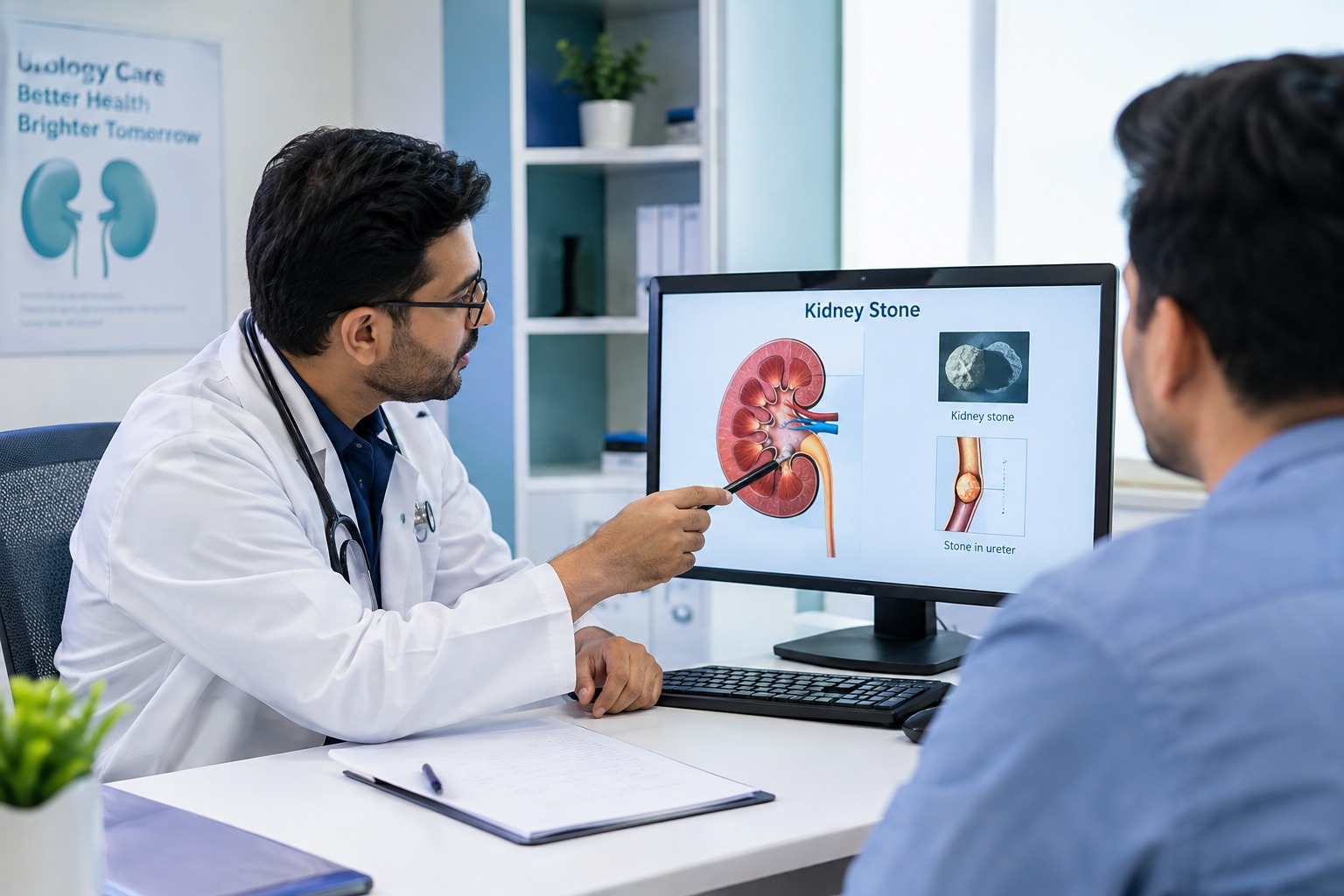
Urology covers conditions affecting the kidneys, bladder, ureters, and urinary tract, and one of the most common reasons patients seek a urologist in Gwalior is kidney stones. At Shashwat Hospital, urological care ranges from managing a single small stone with medication to more advanced procedures for larger or recurring stones, along with treatment for a wider range of urinary tract conditions.
Kidney stones are a bigger concern in this part of the country than many people realize. India falls within what’s known globally as the kidney “stone belt,” a band of countries including Iran, India, Myanmar, and Thailand where stone disease is notably more common, largely linked to climate, hydration patterns, and diet. An estimated 2 million people in India develop kidney stones each year, and once someone has had a stone, the recurrence rate is around 50 percent within 10 years. That recurrence rate is exactly why kidney stone treatment isn’t just about removing the current stone, it’s about understanding why it formed in the first place.
Kidney Stone Treatment in Gwalior
A hernia occurs when an internal organ or tissue pushes through a weak spot in the surrounding muscle wall, most often in the abdomen or groin. It doesn’t heal on its own and typically needs surgical repair once it starts causing symptoms.
Symptoms of kidney stones
Not every stone causes symptoms, especially while still small. When symptoms do appear, they typically include:
- Sharp pain in the back or side, often below the ribs
- Pain that radiates toward the lower abdomen and groin as the stone moves
- Pain that comes in waves, varying in intensity
- Blood in the urine, sometimes visible, sometimes only detected on testing
- Nausea or vomiting alongside the pain
- Frequent urge to urinate, or a burning sensation while urinating
- Cloudy or foul-smelling urine, which can indicate an accompanying infection
Diagnosis
A kidney stone evaluation typically includes a urine test, blood test to check kidney function, and imaging, usually an ultrasound or CT scan, to confirm the stone's size, location, and number.
Treatment options: medication versus procedure
The right approach depends mainly on stone size and location.

Watchful waiting with medication
Small stones, generally under 5mm, often pass on their own with increased fluid intake and pain management, monitored by follow-up imaging.

Medical expulsive therapy
Certain medications can relax the ureter to help a stone pass more easily, used for slightly larger stones still likely to pass naturally.

Shock wave lithotripsy (SWL)
A non-invasive procedure using sound waves to break stones into smaller fragments that pass naturally, used for moderate-sized stones.

Ureteroscopy
A thin scope is passed through the urinary tract to locate and remove or break up the stone, often used for stones lodged in the ureter.

Percutaneous nephrolithotomy (PCNL)
A minimally invasive surgical option for larger stones, performed through a small incision in the back.

Other Urological Conditions Treated
Beyond kidney stones, urological care at Shashwat Hospital covers a broader range of conditions affecting the urinary system:
Urinary tract infections (UTIs)
Diagnosis and treatment for recurring or complicated infections
Prostate conditions
Evaluation and management of an enlarged prostate and related urinary symptoms in men
Bladder conditions
Including frequent urination, incontinence, and bladder infections
Blood in urine (hematuria)
Evaluation to identify the underlying cause, which can range from infection to stones to other conditions requiring further investigation
Urinary tract obstruction
Diagnosis and treatment of blockages affecting normal urine flow
Meet Our Urologist
Dr. Ashish Dubey
M.S. (Ortho) Arthoscopic, Sports injury and Joint Replacement Surgeon
Every kidney stone case is evaluated individually, since the right treatment depends heavily on stone size, location, and the patient’s overall health, not a one-size-fits-all protocol.
Frequently Asked Questions
What are the early symptoms of kidney stones?
Early symptoms often include sharp pain in the back or side, blood in the urine, and a frequent or painful urge to urinate. Pain tends to worsen and shift toward the lower abdomen as the stone moves through the urinary tract.
How can I prevent kidney stones?
The most effective general prevention is staying well-hydrated throughout the day, since concentrated urine makes stone formation more likely. Reducing excess salt intake, moderating animal protein, and, depending on stone type, limiting oxalate-rich foods can also help. Since prevention depends on the type of stone you form, a urologist can recommend specific dietary guidance after your first stone is analyzed.
When is surgery needed for a kidney stone?
Surgery or a procedure is generally recommended when a stone is too large to pass naturally, is causing a blockage, has led to infection, or hasn’t passed despite medication and time. Smaller stones are often managed without surgery first.
Are kidney stones likely to come back?
Yes, recurrence is common, roughly half of people who’ve had one kidney stone develop another within 10 years. This is why understanding the type of stone and its likely cause matters for long-term prevention, not just treating the current episode.
Is kidney stone treatment painful?
Passing a stone naturally can be quite painful, which is why pain management is part of the treatment plan. Procedures like shock wave lithotripsy or ureteroscopy are performed under sedation or anesthesia, so the procedure itself isn’t painful, though some soreness during recovery is normal.
Can kidney stones cause permanent kidney damage?
If left untreated for a long time, particularly when a stone causes a persistent blockage or repeated infections, there’s a risk of kidney damage. This is another reason not to ignore ongoing symptoms or repeatedly self-manage pain without a proper evaluation.
Do I need to change my diet permanently after a kidney stone?
Not necessarily a complete overhaul, but targeted changes based on your specific stone type are usually recommended, since general advice without knowing the stone composition can sometimes be unhelpful or even counterproductive.