

Hernia or Gallbladder surgery in Gwalior
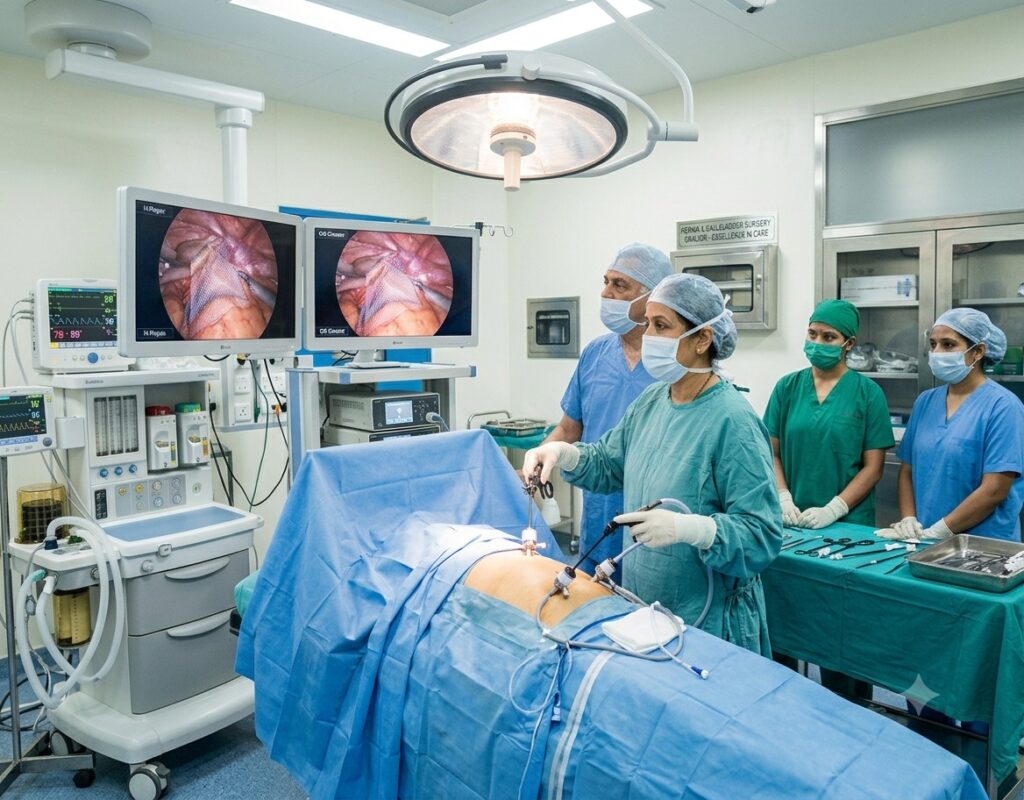
Hernia & Gallbladder Surgery Gwalior
Hernia and gallbladder disease are two of the most common reasons people see a general surgeon, and today, both are usually treated through laparoscopic surgery rather than a large open incision. At Shashwat Hospital, hernia surgery and gallbladder surgery in Gwalior are performed using minimally invasive techniques wherever suitable, which generally means less pain, a shorter hospital stay, and a faster return to daily life.
Gallstone disease is a good example of how much a condition’s prevalence can vary by region. Studies show it’s around seven times more common in North India than in South India, with prevalence estimates ranging from 2 to 29 percent depending on the population studied. A retrospective study from Madhya Pradesh found gallstone disease most common in patients aged 51 to 60, with women accounting for 63.3 percent of cases and abdominal pain being the leading symptom in over 70 percent of patients. If you’ve been told your gallbladder or a hernia needs attention, you’re dealing with one of the most frequently treated conditions in general surgery, not something unusual.
Hernia Surgery in Gwalior
A hernia occurs when an internal organ or tissue pushes through a weak spot in the surrounding muscle wall, most often in the abdomen or groin. It doesn’t heal on its own and typically needs surgical repair once it starts causing symptoms.
Common types of hernia
- Inguinal hernia: The most common type, occurring in the groin, more frequent in men
- Umbilical hernia: Occurs near the belly button, common in both adults and infants
- Incisional hernia: Develops at the site of a previous surgical incision
- Hiatal hernia: Occurs when part of the stomach pushes up through the diaphragm
Symptoms to watch for
- A visible bulge, especially noticeable when standing, coughing, or straining
- Discomfort or a dragging sensation at the site, worsening with activity
- Pain that improves when lying down
- In some cases, sudden severe pain, which can indicate the hernia is trapped or strangulated and needs urgent attention
The laparoscopic repair process.
Laparoscopic hernia repair uses a few small incisions rather than one large cut. A camera and specialized instruments allow the surgeon to place a supportive mesh over the weakened area from inside, reinforcing it without needing to reopen the original tissue extensively. Most patients go home within a day or two and resume light activity within a week, though heavier activity is restricted longer to let the repair fully heal.
Gallbladder Surgery in Gwalior
The gallbladder stores bile used to digest fat, and gallstones form when substances in bile crystallize into hard deposits. Not every gallstone causes problems, but once symptoms start, surgical removal of the gallbladder is usually the recommended treatment.
Common symptoms of gallstones:
Pain in the upper right abdomen, often after eating fatty food
Nausea or vomiting
Bloating and indigestion
In more serious cases, fever or yellowing of the skin (jaundice), which needs urgent evaluation
The laparoscopic cholecystectomy process.
This is the standard procedure for gallbladder removal today. Through a few small incisions, the surgeon removes the gallbladder entirely using laparoscopic instruments guided by a camera. The body functions normally without a gallbladder, bile simply flows directly from the liver into the digestive tract instead of being stored first. Most patients go home the same day or the next, with a return to normal activity within a week to ten days.
Recovery and Aftercare for Both
Recovery after laparoscopic hernia or gallbladder surgery follows a similar pattern, since both use the same minimally invasive approach.
In the first few days:
- Mild soreness at the incision sites is normal and typically managed with prescribed pain relief
- Light walking is encouraged early, as it supports circulation and reduces stiffness
- Heavy lifting and strenuous activity are restricted, usually for 2 to 4 weeks depending on the procedure
- Incisions are kept clean and dry, following the specific wound care instructions given at discharge
In the following weeks
- A follow-up visit checks healing progress and clears you for normal activity
- For gallbladder surgery, some patients notice mild digestive adjustment in the first few weeks as the body adapts to bile flowing directly into the intestine, this typically settles on its own
- For hernia repair, avoiding heavy strain during the healing period reduces the risk of recurrence
- Any unusual swelling, fever, or increasing pain at the incision site should be reported promptly rather than waited out
Frequently Asked Questions
How painful is hernia surgery, and how long is recovery?
Post-surgical discomfort is generally mild to moderate and manageable with prescribed pain relief. Most patients return to light daily activity within a week, with full recovery and clearance for heavier activity typically taking 3 to 4 weeks.
What are the side effects of gallbladder removal?
Most people adjust well after gallbladder removal. Some notice mild digestive changes, such as looser stools after fatty meals, in the first few weeks, which usually settles as the body adapts. Serious complications are uncommon with laparoscopic surgery but should be reported immediately if symptoms like fever or worsening pain develop.
What does hernia or gallbladder surgery cost?
Cost depends on the type of procedure, whether it’s laparoscopic or open, and length of hospital stay.
Can a hernia go away without surgery?
No, a hernia doesn’t heal or resolve on its own since it’s a structural gap in the muscle wall. It can be monitored if small and not causing symptoms, but surgery is the only way to actually repair it.
Is it safe to live without a gallbladder?
Yes, the gallbladder isn’t essential for survival. The liver continues producing bile, which flows directly into the digestive tract instead of being stored, and most people notice no significant change in digestion over time.
How soon after gallbladder or hernia surgery can I go back to work?
This depends on the type of work. Most people return to desk-based work within a week, while jobs involving heavy lifting or strenuous activity typically require 3 to 4 weeks before resuming fully.
Can a hernia come back after surgery?
Recurrence is possible but uncommon with modern laparoscopic mesh repair. Following activity restrictions during the healing period significantly reduces the risk of the hernia returning at the same site.